
Using the right standards
Are we applying judgment where it matters, or letting impulse and habit decide for us?



Judging by wrong standards
In January 1986, NASA was preparing to launch the Space Shuttle Challenger. The launch had already been delayed several times. This time, the problem was the cold. Temperatures at Cape Canaveral were expected to drop well below freezing overnight.
That evening, the engineers joined a conference call with managers. They explained that one component, the O-ring, had never been tested at such low temperatures. If it did not seal properly, hot gases could escape.
One of the engineers recommended delaying the launch. The managers asked whether the engineers could say that launching would be unsafe. The engineers could not. All they could say was that the system had never been designed to operate under these conditions. Whether it was really safe or not, they couldn’t say.
As the conversation continued, the focus shifted. The launch schedule had already slipped. There was public attention. There were expectations to meet. The question became whether there was enough evidence not to launch. Late that night, the recommendation to delay was withdrawn. The launch was approved.
The next morning, Challenger lifted off. Seventy-three seconds later, it broke apart in midair. All seven astronauts were killed.
The tragedy occurred because of flawed standards used to make decisions: fear of public opinion and a reluctance to appear incompetent. The tragedy could have been prevented if the right standard, the opinion of engineers, had been applied.
Judging by the right standards
We judge things by the standards that apply to them—food by its taste, coffee by its flavour, a race car by its speed, and so on. We do not confuse one standard for another. We may reject a blunt chef’s knife, but not a blunt butter knife. We judge a lion by its strength and a rabbit by its speed. We are not disappointed that a lion is not as fast as a rabbit, nor that a rabbit is not as strong as a lion.
Everything is judged by the standard of its own good… In each thing, the best quality should be that for which it is born and that by which it is judged… What then is the best quality of human beings? It is reason. It is by reason that human beings surpass the animals and are surpassed only by the gods. - Seneca, Moral Letters, 76
Yet we often misapply standards, especially when judging ourselves. We use standards that shift from day to day. Approval matters one day, comfort the next, success the day after. Sometimes we judge ourselves by how busy we were, sometimes by how little resistance we faced, sometimes by how well we avoided embarrassment. Our standard keeps shifting depending on circumstances and on other people.
We are confused because we cannot determine our defining quality. Almost everything we can do—running, swimming, fighting, eating, pouncing, climbing—some animals can do better than we can. The only exception is our ability to reason. No other animal can do this as well as we can, if at all.
If reason is our defining quality, shouldn’t it be the standard by which we judge ourselves? The obvious answer is yes, but that is not the standard by which we judge ourselves and others.
Much of our daily dissatisfaction comes from judging ourselves by the wrong measure. We replay conversations, dwell on remarks, worry about impressions, and compare outcomes. We treat these things as evidence of success or failure. But none of them tells us whether we acted with excellence.
We readily yield to what feels pleasant in the moment, fall for praise even when it is insincere, and shy away from discomfort. Rarely do we pause to apply reason. We neglect to exercise judgment and ask ourselves whether our actions make sense, are appropriate, and lead to excellence.
When we ignore this standard, we begin to respond mechanically. A careless remark sets the tone for the day. A minor obstacle feels larger than it is. A delay becomes a personal slight. We move from one reaction to the next without pausing long enough to decide whether any of it deserves our attention.
Using reason introduces a pause. It gives time to separate what matters from what does not. We can decide whether a reaction helps or merely satisfies a momentary impulse. As we apply reason to our thoughts and behaviour, our lives become less scattered.
Reason requires that we take note of what we are about to do. Does it serve any purpose beyond immediate relief? But we seldom pay attention. Why? Emotion is louder. Circumstances push us along. It is easier to retaliate to a slight than choose among the alternatives available to us. When we do not consciously bring reason into play, something else takes its place.
Judging ourselves by reason also changes how we think about mistakes. If the standard were successful, mistakes would be failures. If the standard were comfort, mistakes would be disruptions. But if the standard is reason, mistakes become information. They show us where we failed to pause, where we acted too quickly, and where we allowed something trivial to take precedence. It keeps attention on what we can improve rather than on what we wish had gone differently.
The question, then, is not whether we always get things right. The question is whether we are using the faculty that defines us. Are we applying judgment where it matters, or are we letting impulse and habit decide for us?
That question becomes practical when we translate it into our lives. The Stoics were interested in how reason shows up in ordinary situations: in decisions, conversations, setbacks, and daily work. Here are their suggestions.
1. Focus on your judgment, not the outcomes
Outcomes depend on many factors beyond our control. Other people, timing, chance, and circumstance all play a role. When we judge ourselves by outcomes, we grant these external factors undue authority. A good decision followed by a poor result feels like failure. A careless decision followed by a fortunate outcome appears to be success. Over time, this confuses us about what deserves repetition and what deserves correction.
Judgment belongs to us. It is exercised before the outcome appears. It operates when we choose how to act, what to say, and what to pursue. When we focus on judgment, we pay attention to the decision itself. Did we consider what mattered? Did we ignore what was irrelevant? Did we act deliberately, or did we react out of habit?
No man is free who is not master of himself. - Epictetus, Discourses, 4.1
Mastery here refers to judgment. When we place the standard there, responsibility rests where it should. We may still prefer good outcomes, but we no longer mistake them for evidence of excellence.
Seek not that events should happen as you wish, but wish them to happen as they do happen, and your life will go smoothly. - Epictetus, Enchiridion, 8
Evaluating ourselves by judgment rather than results allows improvement without distortion. We learn from what we did, not from what happened.
2. Use reason to decide what deserves attention
Our attention is limited. Every thought we allow to linger takes space away from something else. Many frustrations persist because we continue to give them attention long after they are no longer useful. A remark, a tone, or a gesture can stay in the mind long after the moment has passed.
Reason helps us decide what deserves that space. A problem that requires action deserves attention. A task before us warrants attention. Speculation about motives, imagined slights, and replayed conversations rarely do.
If you are distressed by anything external, the pain is not due to the thing itself, but to your estimate of it. - Marcus Aurelius, Meditations, 8.47
This estimate happens quickly. Often it goes unnoticed. Reason allows us to return to it and decide whether it is worth keeping. We can leave many things where they appear rather than carry them forward.
You have power over your mind—not outside events. Realize this, and you will find strength. - Marcus Aurelius, Meditations, 12.36
Deliberately directing attention keeps energy available for what matters.
3. Apply reason before reacting, not after
Most of our regrets come from acting first and examining the action later. By the time judgment appears, the moment has passed. Words have already been spoken. Actions have already been taken.
Reason works best when it arrives earlier. This does not require long reflection. Often, a brief pause is enough. In that pause, there is room to consider whether a response serves any purpose beyond immediate relief.
Make it your habit not to respond rashly to impressions. - Epictetus, Enchiridion, 1
Impressions arrive on their own. Responses do not have to. Even a short delay can prevent unnecessary damage.
Nothing is so damaging to judgment as haste. - Seneca, Moral Letters, 40
Reason needs time, even if only a moment. Giving it that time changes what follows.
4. Treat reason as a skill that improves with use
Reason strengthens through practice. The more often we pause, the more familiar the pause becomes. The more often we choose deliberately, the less effort it requires.
This practice does not depend on dramatic situations. Small moments are enough. Interruptions, minor frustrations, routine decisions, and ordinary disagreements all provide opportunities to exercise judgment.
Every habit and faculty is confirmed and strengthened by the corresponding acts. - Epictetus, Discourses, 2.18
Each instance reinforces the next. Over time, the mind becomes steadier because it is guided more often.
Long is the way by precepts, short and effective by examples. - Seneca, Moral Letters, 6
Each small example adds weight to the standard by which we judge ourselves.
Takeaways
Human beings are best judged by how they use reason, not by comfort, approval, or outcomes.
Reason helps us separate what deserves attention from what does not.
Applying judgment before reacting prevents unnecessary regret.
Reason improves through regular use in ordinary situations.
Try this simple exercise
Think about a decision you recently made that did not work out well.
What standards did you apply when making that decision?
Were they rational? Were they appropriate?
What did you learn by analyzing them?Now think about a decision you recently made that worked out well.
What standards guided that choice?
Were they rational? Were they appropriate?
What did you learn by analyzing them?
You have the Power to Change in 2026!
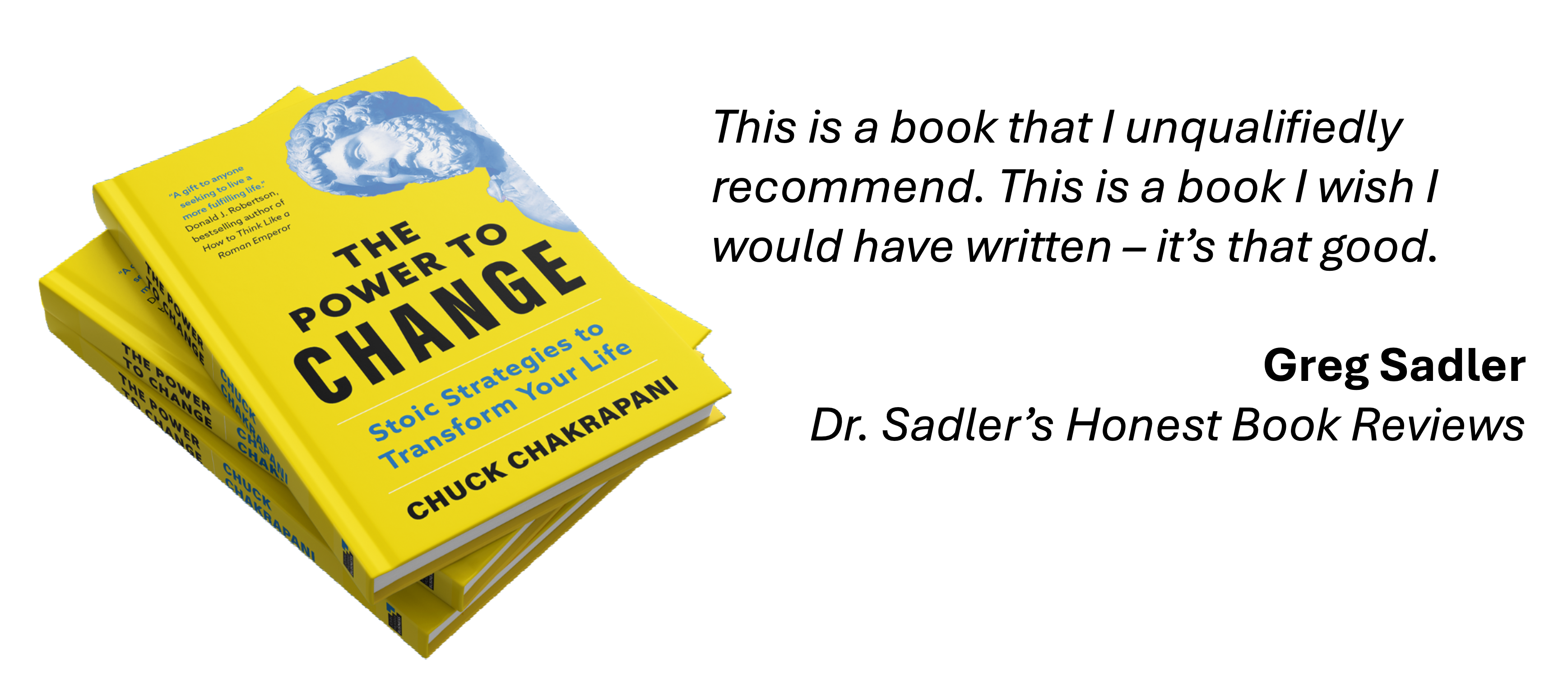
Get your copy here!
How to get the most out of Stoicism—and use the right standards
If you are not yet a part of the prokopton community, consider becoming a paid member to get the most out of Stoic ideas. By upgrading your membership, you will receive:
On the first of the month: an exercise designed to strengthen your Stoic practice
Every weekday: A daily email featuring a Stoic quote, with thoughts for the day and an action plan
Every Saturday: a weekly blog exploring Stoicism and our everyday lives
Every Sunday: Prokopton Essential Readings and special articles
Here is a sneak peek at next week’s emails:
Monday: Learn to deal with impressions
Tuesday: The universe will not be upset when we die
Wednesday: Our judgment decides the outcome
Thursday: Cultivate reason
Friday: Review your day
I look forward to welcoming you into the conversation!
100126
However, sometimes it is difficult not to fall into paralysis by analysis. I suppose that, based on practice, it is possible to find that balance point, very necessary especially in situations that require a quick response.
This is a thoughtful piece, and the Seneca quote raises fascinating questions about human excellence. However, I think there's a crucial philosophical problem embedded in the claim that "reason is our defining quality" and therefore "the standard by which we judge ourselves."
Your Challenger example actually reveals the limitation of this framework. The engineers' failure wasn't primarily rational - they reasoned correctly about the O-rings. Their failure was one of courage - they lacked the strength to stand firm against managerial and political pressure. More rational analysis wouldn't have saved them; they needed what the Greeks called andreia (spiritedness, courage) to resist.
This points to a deeper issue: the Stoic reduction of all human excellence to rational excellence. When Seneca uses the Latin word virtus (virtue) to translate the Greek arete (excellence), something crucial gets lost. The Greeks distinguished between:
Arete = excellence generally (what any thing does well based on its function)
Andreia = courage specifically (excellence of the spirited part of soul)
Sophia = wisdom (excellence of the rational part)
Sophrosyne = moderation (excellence of the appetitive part)
Plato's insight in the Republic was that different parts of the soul have different functions and therefore require different excellences. You can't solve a courage problem with more reasoning, just as you can't solve a moderation problem or a constitutional integration problem by adding more rational analysis.
In clinical practice, this matters enormously. When clients need to develop healthy assertiveness, set boundaries, or feel righteous anger, telling them to "use more reason" misses the functional diagnosis. They don't need more logistikon; they need properly functioning thumos.
I've written more about how this Latin-to-Greek translation problem has distorted our understanding of virtue and excellence here:
https://open.substack.com/pub/chestersundepsyd569013/p/when-translation-betrays-philosophy?r=1ujdpz&utm_campaign=post&utm_medium=web&showWelcomeOnShare=true
The short version: when the Romans translated arete (general excellence) using virtus (manliness/courage), they collapsed Plato's functional pluralism into the Stoic monolith of "virtue as rational excellence."
Reason is certainly important - but it's one excellence among several, not the singular standard for all human judgment.