
Going with the flow
When dealing with indifferents, accept reality as presented to you


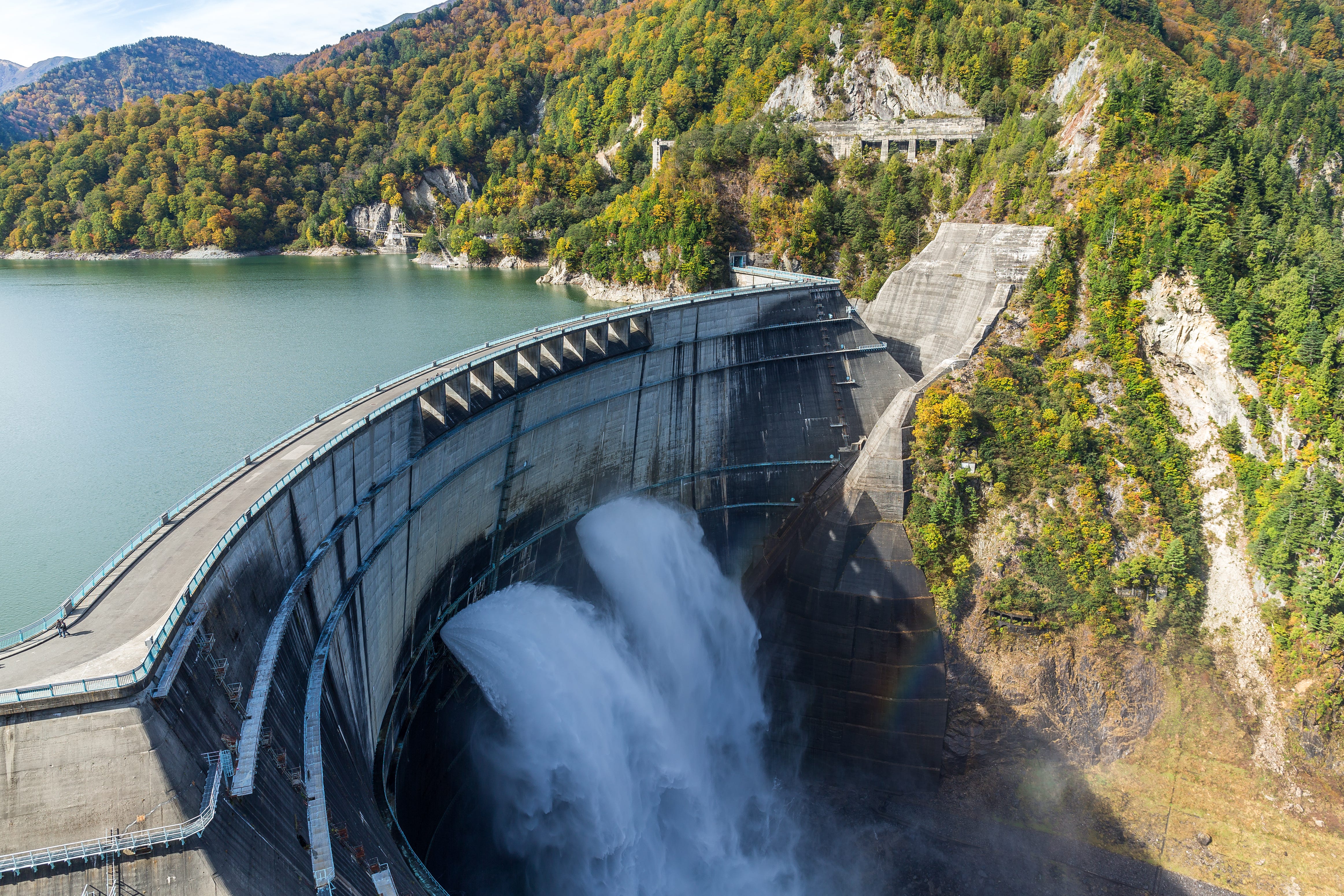
I am fascinated by water.
Water flows freely until it encounters a major obstruction, such as a wall or a dam. Then it stops. It doesn’t struggle against an obstruction that it cannot overcome. The obstruction may last for a day or for a hundred years. While the water does not struggle against a force it cannot overcome, it also does not give up. When it finds even the tiniest opening in the obstruction, it starts flowing through immediately, without delay.
Water is a metaphor for a struggle-free life. Don’t struggle against things that happen to you. But when something is under your control, act.
Zeno of Citium, the founder of Stoicism, offers his own metaphor. Suppose a dog is tied to a cart. When the cart starts moving, if the dog chooses to move with it, it will not be harmed. But if it chooses to resist, it will be dragged along anyway, and it may be harmed. So when we face situations that are beyond our control, it is futile to struggle against them.
Fate guides the willing, but drags the unwilling. - Cleanthes
It makes sense to be guided rather than dragged along by life. However, there are situations in life where it is not advisable to “go with the flow.” If all your friends spend all their evening drinking or even doing drugs, you don’t have to “go with the flow.” So, although we should not resist reality, there are times when it is not desirable to go with the flow. But how do we distinguish between the two? Here is a guideline.
1. Go with the flow when dealing with indifferents
Going with the flow is easier than going against it. But what is easier is not always better. Sometimes the path of least resistance may be the wrong path. There are many instances in life where the right path is the more difficult one.
How do we decide whether to go with the flow or against it? There is one simple test:
Does this have anything to do with my character, or is it an indifferent?
If it is an indifferent and has nothing to do with virtue, accept the situation as it is and go along with it without resisting it.
Here are a few examples.
I was thinking of going on a hike today. But it is raining. I am annoyed.
This has nothing to do with your character. Resisting the rain does not improve your life. There is nothing to be annoyed about. Treat the rain as a constraint you need to deal with right now.
I did so much to help my friend over the years. Now that I need a small favour, he refuses. I am really upset.
What your friend does relates to his character, not yours. So this is an indifferent. There is no need to get upset. Find another way to solve your problem.
Some colleagues are spreading rumours about me. I am worried that my reputation will be ruined.
We cannot control what others say or do. It has nothing to do with our character. Not much is gained by worrying about it. Accept that even flawless behaviour will attract criticism. Let them say what they say.
Why go with the flow? Why not complain about the rain, argue with your friend, or confront your colleagues? Because such actions leave us struggling and exhausted, achieving nothing of significance.
He who goes with the current of the river is carried easily; he who struggles against it is dragged roughly and exhausted. – Plutarch, Life of Pericles
2. Find a different path when faced with character damage
Most problems we face involve indifferents, and it makes sense to accept them. But from time to time, we face situations that involve virtue. In such cases, accepting the situation would damage our character. Then we must go against the flow.
Here is an example.
Your boss asks you to do something unethical. Doing it will benefit you, especially with an upcoming performance review.
Should you go with the flow? No. Doing something unethical is not an indifferent—it damages your character.
In this case, you should find a way to avoid acting unethically rather than passively accepting the situation.
Your aim is not necessarily confrontation (though it may be required). Your aim is to avoid wrongdoing in whatever way minimizes further problems. You might ignore the request, delay it, or suggest alternatives.
What if this displeases your boss? That is a risk you must take. When your character is at stake, compromises make you dependent on others, and make you a slave.
A man’s master is he who is able to confer or remove whatever that man seeks or shuns… Whoever wishes to be free must neither wish for anything nor avoid anything that depends on others. - Epictetus, Enchiridion, 14
Freedom has a price: not depending on others for your well-being.
3. Make non-resistance your default mode
Our worries and anxieties are endless. It does not matter whether we are rich or poor, educated or illiterate, well-known or obscure—we are all subject to them.
Most worries sound like this:
I am worried about losing my job
I am worried about being helpless in old age
I am worried about my health
I am worried about my financial situation
I am worried about political outcomes
What is common to all these situations? They are all indifferents. They have nothing to do with your character.
We can eliminate a large portion of our worries by going along with what is happening instead of resisting it.
If we make non-resistance our default and deviate from it only when the issue concerns virtue, we can reduce most of our anxiety. We exhaust ourselves by wishing reality were different from what it is. Let that expectation go.
Don’t seek for things to happen as you wish, but wish them to happen as they do, and you will go on well. - Epictetus, Enchiridion, 8
As Chrysippus said, when you push a cylinder, it rolls. When you push a cone, it spins. You cannot make a cylinder spin or a cone roll by trying harder. Why waste time trying?
Takeaways
Go with what is happening when it is an indifferent
Go against the flow when your character is involved
Recognize that most worries come from indifferents
Make acceptance of reality your default mode
Try this
For the next few days, practice this simple exercise:
Notice a moment of irritation or resistance. It could be something small—weather, a delayed response, someone’s behaviour.
Ask one question. “Is this about my character, or is it an indifferent?”
If it is an indifferent: Drop the resistance. Let it be. Treat it like the rain or a river current.
If it concerns your character: Identify the right action—even if it is harder—and take one small step in that direction.
Reflect briefly at the end of the day:
Where did you waste effort resisting?
Where did you act when it mattered?

060626